

Tax season is much easier when you have the right documents ready before you begin. Whether you prepare your own return or work with a tax professional, gathering everything in advance can help prevent repeated follow-up requests, overlooked income, missed deductions, and avoidable filing delays.
The IRS recommends keeping your tax documents and forms together so you can prepare an accurate return, claim the deductions or credits available to you, and avoid errors that could delay your refund.
So, what do you need to file your taxes?
The exact answer depends on your household, income sources, business activities, investments, and major life events. You probably will not need every item on this list. However, reviewing each category can help you identify the tax documents that apply to your situation.
Use this comprehensive tax filing checklist as you prepare for your appointment with Matterhorn Tax Planning.
Start With Your Personal Information
Basic identification details are an important part of filing an accurate tax return. Make sure names and identification numbers are correct and match official records.
Have the following information ready:
- Your full legal name as it appears on your Social Security card
- Proof of identification, such as a government-issued photo ID
- Your current address
- Any previous addresses connected to the tax year you are filing
- Your Social Security number or taxpayer identification number
- Your date of birth
- Your spouse’s full legal name, date of birth, and Social Security number or taxpayer identification number, if married
- Your Identity Protection PIN, or IP PIN, if the IRS issued one
- Your spouse’s and dependents’ IP PINs, if applicable
- Bank routing and account numbers for a direct-deposit refund or electronic tax payment
- Relevant foreign reporting and residency information
- A copy of your previous year’s federal and state tax returns
The IRS advises taxpayers to use the name on record with the Social Security Administration and to have Social Security or individual taxpayer identification numbers for everyone included on the return. It also recommends gathering bank routing and account numbers, the current mailing address, the prior-year return, and any IP PIN issued by the IRS.
Why Your Previous Addresses May Matter
Previous addresses can be especially important if you moved during the year. Your tax preparer may need to understand where you lived and worked during different parts of the year when preparing applicable state and local returns.
Bring the dates of your move and the addresses involved so your preparer can review your residency situation.
Dependent Information
Claiming a child or another person as a dependent may affect several parts of your tax return. Gather complete information for every person you expect to include.
For each dependent, bring:
- Full legal name
- Date of birth
- Social Security number or taxpayer identification number
- Relationship to you
- Number of months the person lived with you during the year
- Records of any income the dependent received, including investment income
- Form 1098-T if the dependent attended college
- A birth certificate for a new dependent, such as a baby born during the tax year
Check names and Social Security numbers carefully. A typing error or mismatch can create problems when the return is electronically filed.
Daycare and Dependent Care Records
For daycare or dependent care expenses, gather:
- Statements or receipts from each care provider
- The provider’s legal name
- The provider’s address
- The provider’s Employer Identification Number, Social Security number, or other taxpayer identification number
- The total amount paid during the year
- A breakdown of the expenses paid for each dependent
- Records for applicable summer camp programs
The IRS tax-preparation checklist includes the total amount paid to a daycare provider and the provider’s tax identification number among the information taxpayers should bring.
Custody-Sharing Documents
When parents share custody and the custodial parent is releasing the right to claim a child to the noncustodial parent, bring a completed Form 8332.
Form 8332 is used by a custodial parent to release– or revoke a previous release of– the claim involving a child. The noncustodial parent generally attaches the applicable form or statement to the tax return.
Employment and Gambling Income Documents
Your tax return should account for income received throughout the year. Wait until you have collected the income documents that apply to you before filing.
For employment and gambling income, bring:
- Form W-2 from every employer
- Form W-2G for gambling winnings
If you worked for multiple employers, changed jobs, or held a seasonal or part-time position, make sure you have a W-2 from each employer.
Do not assume a small amount of income can be left off simply because the position was temporary. Give all income documents to your tax professional so the return can be prepared using the complete information.
1099 Income Documents
Forms in the 1099 series report many different types of income. The form number usually indicates the type of payment or transaction being reported.
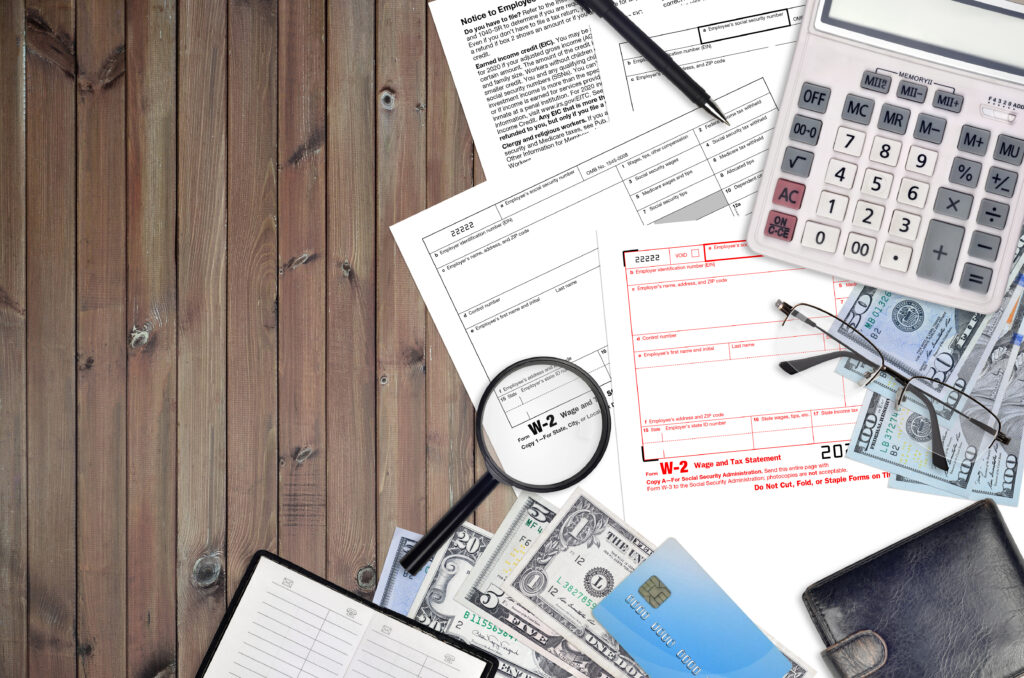
Bring every 1099 you receive, including any of the following:
- Form 1099-NEC: Nonemployee compensation, often associated with self-employment or independent contractor work
- Form 1099-MISC: Certain miscellaneous income
- Form 1099-K: Payments processed through payment cards or third-party settlement networks, which may include platforms such as PayPal, Cash App, Venmo, or Stripe
- Form 1099-G: Certain government payments, including unemployment compensation or a state tax refund
- Form 1099-C: Cancellation of debt
- Form 1099-R: Distributions from pensions, annuities, retirement plans, IRAs, or similar accounts
- Form 1099-INT: Interest income
- Form 1099-DIV: Dividend income
- Form 1099-B: Brokerage and investment transactions
- Form 1099-DA: Certain proceeds from digital asset transactions
The IRS advises taxpayers to gather all year-end income forms, including W-2s and applicable 1099s from banks, government agencies, employers, payment platforms, retirement plans, and other payers.
Retirement Income and Basis Information
For retirement income, gather:
- Every Form 1099-R you received
- Records showing your IRA or pension basis
- Documentation of previous after-tax contributions, when applicable
- Form SSA-1099 if you received Social Security benefits
Basis information can be important when determining how a retirement distribution should be reported. Bring prior-year tax returns and any long-term records related to after-tax retirement contributions.
Investment and Cryptocurrency Records
In addition to Forms 1099-INT, 1099-DIV, and 1099-B, bring brokerage statements and other records that show your investment activity.
For cryptocurrency and other digital assets, gather:
- Form 1099-DA, if received
- Transaction histories
- Records of purchases, sales, exchanges, and transfers
- Cost or basis records
- Statements from every platform or broker you used
Form 1099-DA is used by brokers to report proceeds– and, in some cases, basis– from digital asset transactions. The IRS also states that taxpayers must report applicable digital asset income, gains, and losses whether or not they receive Form 1099-DA.
Self-Employment and Schedule C Documents
If you are self-employed, work as an independent contractor, operate a sole proprietorship, or receive business income, you will generally need more than your 1099 forms.
Gather records showing all business income, including:
- Forms 1099-NEC
- Forms 1099-MISC
- Forms 1099-K
- Cash payments
- Checks
- Electronic payments
- Sales records
- Invoices
- Other income received without a tax form
Your total business income records should include both income reported on tax forms and business income for which no form was issued.
Mileage and Business Vehicle Records
When a vehicle was used for business, bring:
- Total business miles driven during the year
- Total miles driven for all purposes during the year
- A mileage log or similar contemporaneous records
- Vehicle purchase documents
- Vehicle lease documents
- The date the vehicle was placed in service for the business
- Records of gas expenses
- Repair and maintenance receipts
- Vehicle insurance statements
- Other vehicle expenses, if using the actual-expense method
Separating business mileage from total annual mileage can help your preparer evaluate the business use of the vehicle.
Do not rely only on an estimate made at the end of the year when more complete mileage records are available. Bring calendar entries, mileage-app reports, service records, and other documentation that may help support your total.
Home Office Information
When a home office may apply to your self-employment activity, gather:
- Total square footage of the home
- Square footage of the office or business-use area
- Rent paid
- Mortgage interest statements
- Electric bills
- Gas bills
- Water bills
- Internet expenses
- Homeowners or renters insurance
- Relevant repair and maintenance expenses
These records give your tax professional the information needed to determine whether the space and expenses meet the applicable requirements and how any allowable amount should be calculated.
The IRS states that qualifying self-employed taxpayers may be able to deduct certain expenses for a portion of a home used for business. Relevant expenses can include the business portion of rent, mortgage interest, utilities, insurance, maintenance, and repairs. Specific eligibility and use requirements apply.
Business Expense Records
Gather receipts, invoices, account statements, and other records for applicable business expenses.
These may include:
- Advertising and marketing
- Business insurance
- Office supplies
- Software and online subscriptions
- Business-use percentage of phone and internet expenses
- Equipment purchases
- Repairs and maintenance
- Legal fees
- Tax-preparation and accounting fees
- Bank and merchant-processing fees
- Continuing education
- Business-related meals
- Business travel, including airfare, lodging, and rental vehicles
- Business credit card statements
A credit card statement can be a useful organizational tool, but it may not always explain the business purpose of an individual purchase. Keep receipts and notes that identify what was purchased and how it related to the business.
Business Records and Prior-Year Documents
Also bring:
- Your Employer Identification Number letter, if you have an EIN
- Your prior-year Schedule C
- Prior-year depreciation schedules
- Records for equipment purchases and other business assets
- The cost of each asset
- The purchase date
- The date each asset was placed in service
- A profit-and-loss statement, if applicable
- A balance sheet, if applicable
An EIN is not required for every sole proprietor, but bring the IRS EIN assignment letter if one has been issued to your business.
Prior depreciation schedules are particularly important because they show how business assets have been treated in earlier years.
Rental Property Income and Expense Records
Rental property owners should organize records separately for each property.
Bring the following rental income information:
- Total rents collected
- Records of other amounts received from tenants
- Prior-year Schedule E
- Asset information
- Prior depreciation schedules
- Purchase and closing documents for new rental property
- Information about improvements or assets placed in service
Also gather records for applicable rental expenses, including:
- Property taxes
- Mortgage interest
- Insurance
- Repairs
- Supplies
- Maintenance
The IRS advises rental property owners to maintain records of both rental income and rental expenses. Rental-related expenses may include mortgage interest, real estate taxes, insurance, repairs, maintenance, and depreciation, depending on the circumstances and applicable rules.
If you own more than one rental property, clearly label the income and expenses associated with each address. Avoid combining the records for several properties into one unlabeled total.
Health Insurance and HSA Documents
For health insurance and health savings accounts, bring:
- Form 1095-A: Health Insurance Marketplace Statement
- Form 1095-B: Health Coverage, if received
- Form 1095-C: Employer-Provided Health Insurance Offer and Coverage, if received
- Form 5498-SA: HSA contribution information
- Form 1099-SA: HSA distribution information
Form 1095-A is important when you or someone in your household received coverage through the Health Insurance Marketplace. Taxpayers expecting Form 1095-A should wait until they receive it before filing.
Forms 1095-B and 1095-C are not generally required to file a federal income tax return, but they are useful records and should be kept with your tax documents.
Education Tax Documents
Students, parents, and borrowers may need several education-related forms and records.
Gather:
- Form 1098-T for tuition
- Form 1098-E for student loan interest
- Form 1099-Q for distributions from a qualified tuition program or education savings account
- Receipts for books
- Receipts for required supplies
- Other education expense records
Keep the documents for each student together. When more than one person in the household attended school, label the records clearly so your preparer knows which expenses and forms belong to each student.
Records for Deductions and Tax Credits
Tax forms report much of the information needed for a return, but many deductions and credits also depend on receipts, statements, and records that you maintain yourself.
Depending on your situation, gather:
- Receipts and acknowledgment letters for cash charitable donations
- Records for non-cash charitable donations
- Medical expense receipts, if you may itemize
- Records of capital loss carryovers
- Prior depreciation carryovers
- Net operating loss carryover information
- Statements for retirement contributions
- Records of other qualifying expenses or life events
Provide the records to your tax professional even when you are not certain whether an expense qualifies. Your preparer can evaluate the information under the applicable rules.
New Vehicle Purchase and Loan Interest Records for 2025–2028
If you purchased a new vehicle and want your preparer to evaluate whether the temporary qualified passenger vehicle loan interest deduction applies, bring:
- The vehicle purchase agreement
- Loan documents
- The loan origination date
- The Vehicle Identification Number, or VIN
- A statement showing the interest paid during the year
- Documentation that may show where the vehicle underwent final assembly
The temporary provision applies to tax years 2025 through 2028 for qualifying interest paid on a qualifying personal-use vehicle loan. Eligibility requirements apply, leases do not qualify, and the VIN must be included on the return when the deduction is claimed.
Bringing the purchase, loan, interest, and vehicle records allows your tax professional to determine whether your vehicle and loan meet the applicable requirements.
Records Confirming Overtime Worked
For tax years 2025 through 2028, keep documentation of qualified overtime compensation.
Bring:
- Form W-2 or Form 1099
- Pay stubs
- Employer-provided statements
- Payroll summaries
- Records showing regular pay and overtime pay
- Any other documentation confirming the qualified overtime amount
The temporary deduction relates to the qualifying portion of overtime compensation that exceeds the worker’s regular rate of pay, subject to eligibility rules and limitations. The IRS advises taxpayers to retain records supporting the qualified overtime amount reported.
Miscellaneous Tax Documents
A few items are easy to overlook because they may not arrive with the more familiar W-2 and 1099 forms.
Remember to gather:
- Jury duty pay records
- Records of federal estimated tax payments
- Records of state estimated tax payments
- Records of local estimated tax payments
- Prior-year refunds applied toward the current tax year
- A copy of last year’s federal tax return
- A copy of last year’s state tax return
Include the dates and amounts of estimated payments whenever possible. Do not provide only an estimated annual total when payment confirmations or account records are available.
How to Organize Your Tax Documents Before Filing
You do not need an elaborate filing system. A few simple steps can make the preparation process much smoother.
Create separate folders– paper or digital– for:
- Personal and dependent information
- W-2 and 1099 income
- Investments and digital assets
- Self-employment income and expenses
- Rental properties
- Education
- Health insurance and HSA records
- Deductions and credits
- Estimated tax payments
- Prior-year returns
Within your business and rental folders, organize expenses by category. Clearly identify the property, business, vehicle, or dependent connected to each expense.
Avoid sending unlabeled photographs of receipts when possible. A simple spreadsheet or summary can help, but retain the original receipts and supporting statements.
What Should You Do If a Tax Form Is Missing?
Review your prior-year return and current financial accounts to identify forms you may still be waiting to receive.
When an expected form has not arrived:
- Check whether it was delivered electronically
- Review your online account with the employer, bank, lender, school, broker, or payment platform
- Contact the organization that should have issued it
- Request a corrected form if the original contains an error
- Tell your tax professional that a document is missing
Do not guess at important figures simply to file more quickly. The IRS advises taxpayers to gather all documents before preparing the return and provides separate procedures for certain missing or incorrect forms.
Get Ready to File Your Taxes With Matterhorn Tax Planning
Knowing what you need to file your taxes can remove much of the stress from tax season. Start by gathering personal and dependent information, then work through your income, business, rental, education, health insurance, and deduction records one category at a time.
Not every item on this checklist will apply to every taxpayer. However, bringing complete records helps your tax professional understand the full picture and identify the forms, deductions, and credits that may apply to your return.
Matterhorn Tax Planning can help you sort through your documents, prepare an accurate return, and determine whether additional information is needed. Contact our team to begin preparing for your next tax filing appointment.